
A Gorgeous Album from Arily Michele
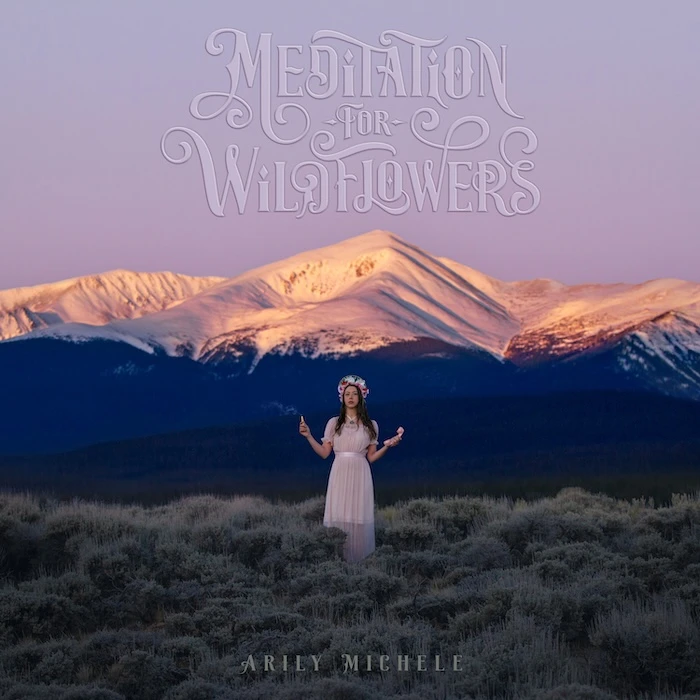
Arily Michele opens meditation for wildflowers by taking a breath. Against the mountain scenery of “alpenglow,” that ordinary act becomes a small revelation: “I’m alive.” It’s a fitting entrance to an album inspired by Rocky Mountain landscapes and flowers returning after forest fires. Across her third album, Michele considers what survives upheaval, bringing a classically trained soprano and an appetite for gothic storytelling to dream pop’s familiar promise of escape. The scenery offers plenty of beauty, though its inhabitants rarely get to remain undisturbed.
“alpenglow” establishes that world through spruce, ponderosa, and aspens whose “skeletal dendrites” suggest a landscape wired into the speaker’s nervous system. “I am the light of the morning,” she repeats, moving from observing her surroundings to claiming a place within them. Glistening keys and circling figures suit that gradual awakening. Elsewhere, “desert orchid” introduces greater rhythmic definition, its syncopated bass giving the album’s drifting atmosphere a welcome physical impulse. “butterfly garden,” featuring Lauren Amethyst and Dana P, expands the sense of a shared, inhabited landscape.
The historical narrative of “silver dollar” complicates this pastoral refuge. Rosemary Echo “Silver Dollar” Tabor enters the song with a silver rattle, her identity already inseparable from her family’s fortune. Describing her as a “precious golden girl” makes affection sound uncomfortably close to appraisal. When that fortune collapses, the neighbors turn spectators. The chorus’s exchanges of silver for gold and water for wine promise transformation while leaving desire untouched. Michele has connected the story to her own fear of failure; that personal investment helps the song treat its subject’s hunger with sympathy.
“digitalis” gives the album’s flowers a more sinister purpose. Its narrator lives under the authority of a vain, cruel man who mistakes her apparent powerlessness for ignorance. Her windowsill garden becomes knowledge he never bothered to acquire. The revenge fantasy makes domestic decoration dangerous, while the attraction to kerosene suggests how thoroughly intimacy and destruction have become confused. Michele’s imagery is especially effective here because its prettiness has consequences.
Across the wider record, “palo santo” supplies guitar shimmer and an explicit Colorado connection, while “komorebi” and “anywhere but here” extend its preoccupation with place and escape. The overlapping harmonies of closing track “waning gibbous” give the expansive sequence an appropriately enveloping farewell. An hour is a generous stretch for such a sustained atmosphere, and the more sharply drawn narratives provide useful changes in focus. They also reveal Michele’s strength: making beautiful surroundings accommodate uncomfortable lives. By the end, the wildflowers feel like fitting company for her characters: vulnerable to what happens around them, capable of returning, and occasionally equipped with defenses of their own.